How To Use RPM For Diabetes Management In 2026?

Managing diabetes is no longer limited to clinic visits and manual logs. RPM for diabetes management is changing how care is delivered in 2026. Remote Patient Monitoring (RPM) allows doctors to track patient health between visits and intervene before complications arise.
For clinics, this means better outcomes with less operational burden. For patients, it means tighter glucose control without constant hospital trips. Studies show RPM can significantly reduce HbA1c levels, cut hospital readmissions, and improve long-term adherence. When layered with AI, RPM goes a step further by predicting glucose trends and enabling proactive care instead of reactive treatment.
As diabetes cases continue to rise globally, RPM is quickly becoming a standard of care, not just an add-on. The real advantage lies in choosing the right system that is easy for patients to use and efficient for providers to manage at scale.
What Is RPM for Diabetes Management?
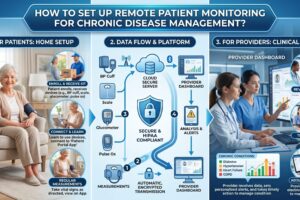
Remote Patient Monitoring (RPM) sends real-time health data from home devices to healthcare providers. For diabetes, it focuses on continuous glucose monitors (CGMs), smart glucometers, blood pressure cuffs, and scales.
Patients wear or use these tools daily. Data uploads automatically to a secure platform. Doctors review trends and adjust treatments without office visits.
In 2026, RPM stacks with Medicare programs like CCM and RTM, boosting clinic revenue by $220+ per patient monthly.
How Does RPM Work for Diabetes Patients?
What Devices Are Used in RPM for Diabetes?
- Continuous Glucose Monitors (CGMs) like Dexcom or Freestyle Libre track sugar 24/7.
- Wearables monitor activity, weight, and blood pressure for full metabolic views.
- Cellular glucometers send fingerstick results instantly.
What Is the Data Flow in RPM Systems?
Data flows from device to app, then cloud platform. AI flags highs/lows. Alerts go to patients and providers for quick fixes.
Example: A rising glucose trend prompts meal reviews or insulin tweaks.
Why Choose RPM for Diabetes Management?
RPM cuts HbA1c by 0.42% on average per meta-analysis of 20 trials. One program dropped it from 10.4% to 7.0% in 50% of patients.
It reduces hospital readmissions by 25% in clinics using RPM.
63% of high-risk patients graduate RPM with stable sugars and goal HbA1c.
What Risks and Contraindications Exist in RPM for Diabetes?
RPM boosts control but has risks. Data inaccuracy from poor device use leads to wrong adjustments.
Increased patient anxiety from constant alerts is common.
One study noted rising hypertension due to glucose focus over BP.
Contraindications:
– Severe cognitive impairment (can’t manage devices).
– Unwillingness to share data (privacy fears).
– No smartphone/internet access.
Financial burdens and tech disorientation affect 87% of providers’ patients.
What Do Real Users Say About RPM for Diabetes?
Users praise easy setup and monthly reports that flag issues early. Clinics note constant patient outreach improves satisfaction.
Pain points include excessive calls (prefer emails) and doctor interfaces needing speed for busy days.
93% of providers struggle with inter-visit communication; RPM fixes this but tech teaching takes time.
In our analysis, users want simpler apps and less overload: key for adherence.
Why Is AI Integration the Missing Link in RPM for Diabetes?
AI spots glucose trends with lifestyle data, predicting rises before crises.
AI boosts adherence by 36% and lowers A1c faster.
Most ignore AI for personalization. AI enables proactive care, like auto-education on meals. This positions us for AI search features.
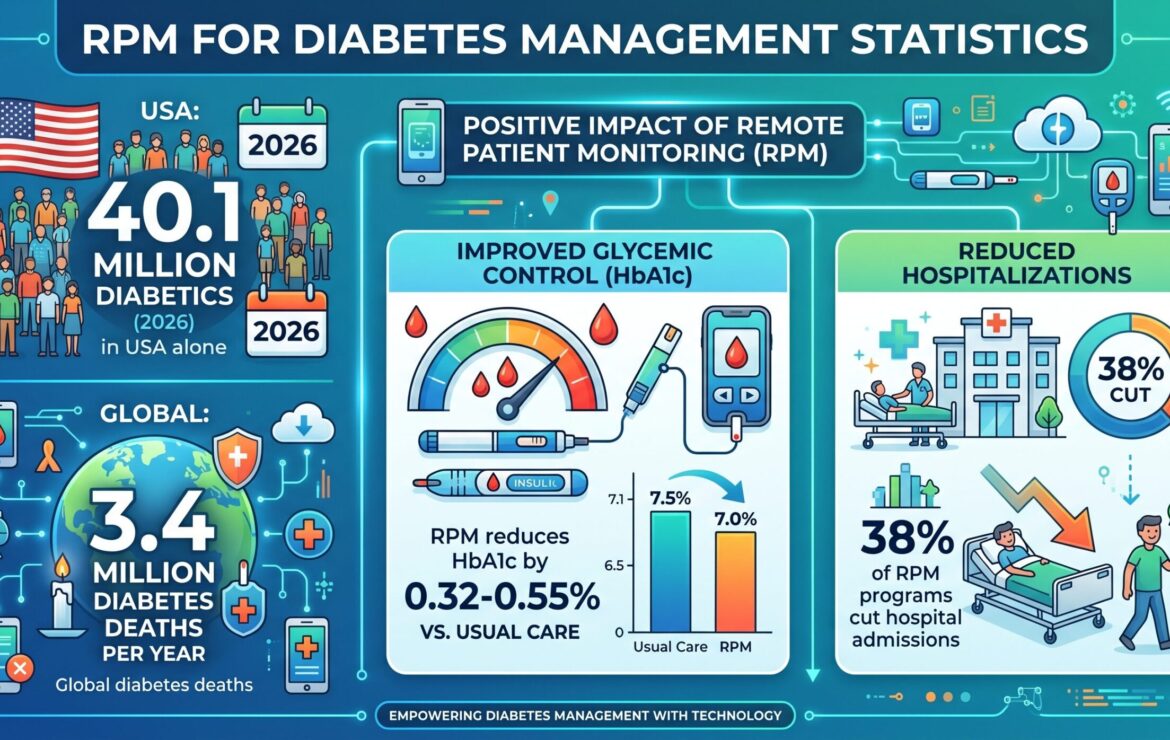
RPM for Diabetes Management Statistics
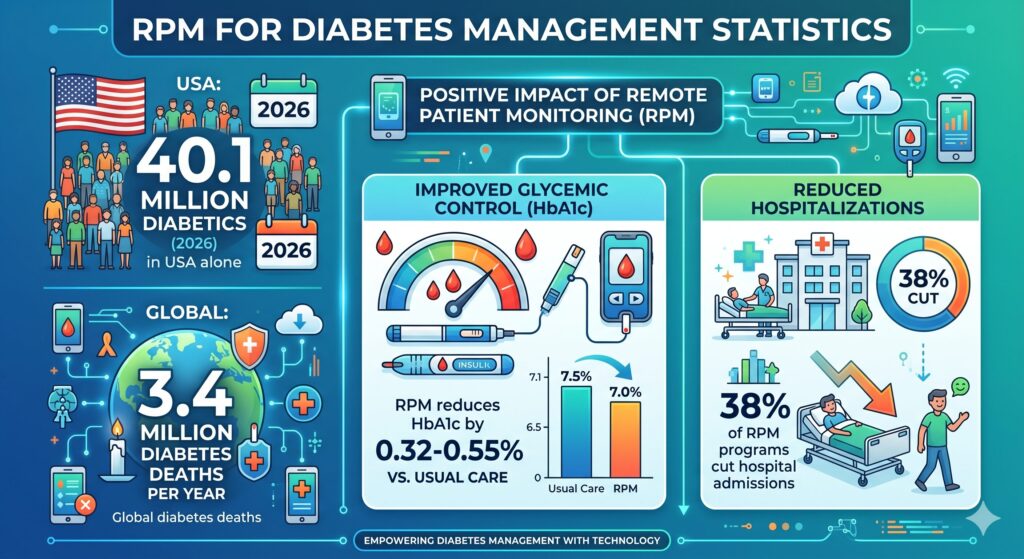
- 40.1 million diabetics in USA alone (2026).
- Global diabetes deaths: 3.4 million per year.
- RPM reduces HbA1c by 0.32-0.55% vs. usual care.
- 38% of RPM programs cut hospital admissions.
These stats show RPM’s impact on a massive scale.
How to Start RPM for Diabetes Management?
- Get a referral for CGM/glucometer.
- Choose a Medicare-covered platform.
- Train on app (5-10 mins daily).
- Review alerts weekly with the provider.
Clinics see 40% fewer crises in 6 months.
If you’re a doctor or clinic looking to implement RPM without the tech headaches, c-lynx helps you set up, manage, and scale Remote Patient Monitoring seamlessly. Book a free consultation call today.
FAQs
What Does RPM Stand for in Diabetes Management?
RPM means Remote Patient Monitoring. It tracks vitals remotely for timely diabetes interventions.
Is RPM Covered for Diabetes by Medicare?
Yes, RPM stacks with CCM/RTM for $220+/month billing.
Can RPM Prevent Diabetes Complications?
Yes, it cuts readmissions 25% and stabilizes glucose to avoid neuropathy/kidney issues.
What Are Common RPM Devices for Diabetes?
CGMs, smart glucometers, BP cuffs.
Does RPM Work for Type 1 and Type 2 Diabetes?
Best for Type 2; adaptable for Type 1 with CGM.
How Much Does RPM Improve HbA1c?
0.42% average; up to 3.4% in programs.
Are There Privacy Risks in RPM for Diabetes?
Data is HIPAA-secure, but share only with consent.
Related posts